 Due
DueThe world wastes the equivalent of 1 billion meals a day — here are the numbers
About 1.05 billion tonnes of food is wasted every year — roughly a fifth of everything that reaches consumers. In the US that's an estimated $162 billion worth of uneaten food; in the UK, household food waste alone is worth about £17 billion a year. This article sticks to numbers published by the UN and by US and UK official bodies, then looks at what actually helps at home.
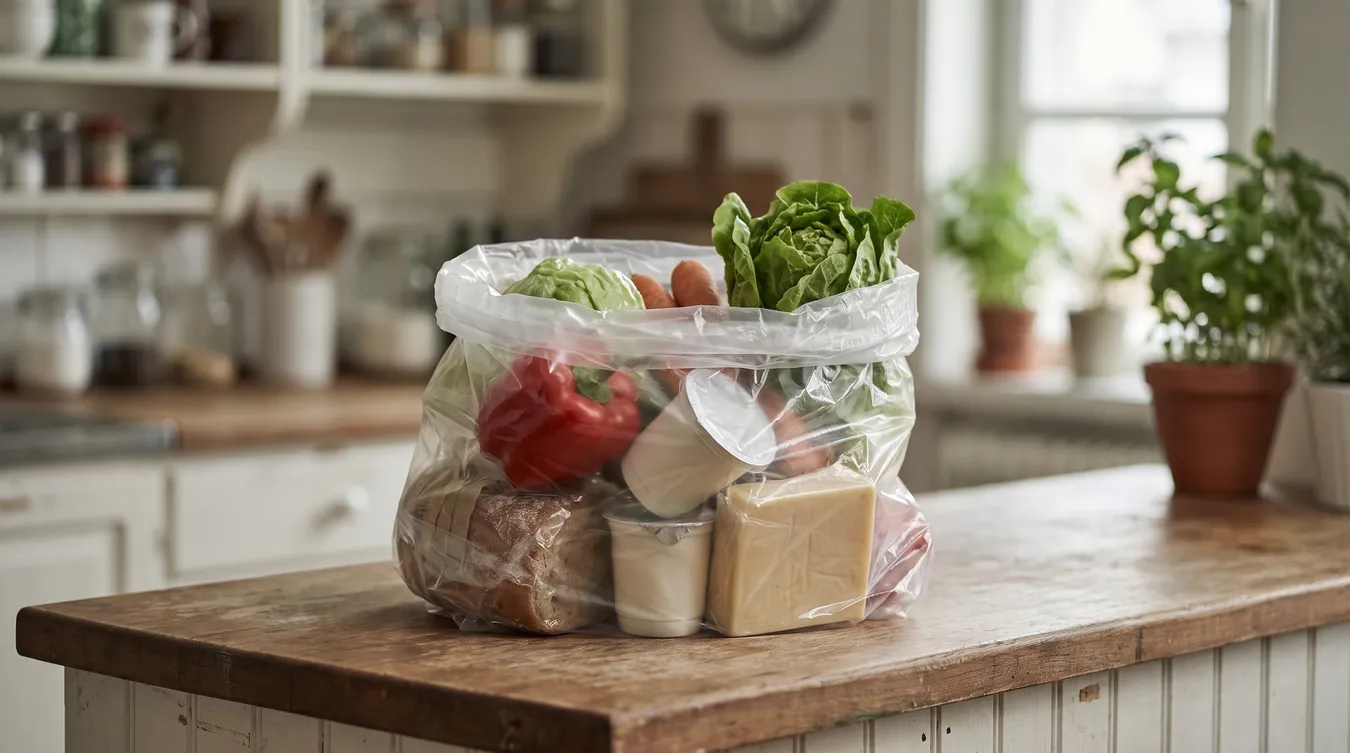
Published July 18, 2026 · Every statistic in this article comes from the primary sources listed at the end. The photo is an illustrative image.
1. The global numbers
The official global measure of consumer-level food waste is the UN Environment Programme's Food Waste Index Report. The current edition was published in 2024, covering 2022 data.
| Indicator | Figure | Compiled by |
|---|---|---|
| Food wasted at consumer level (retail, food service, households) in 2022 | 1.05 billion tonnes | UNEP |
| Share of food available to consumers that was wasted | ~19% (almost one-fifth) | UNEP |
| — from households | 631 million tonnes (60% of the total) | UNEP |
| — from food service | 290 million tonnes | UNEP |
| — from retail | 131 million tonnes | UNEP |
| Household waste per person | 79 kg (174 lb) a year | UNEP |
| In meals | equivalent to more than 1 billion meals a day (estimate) | UNEP |
| Food lost between harvest and retail (before it ever reaches a shop) | ~13% | FAO |
Terminology: international statistics distinguish "food loss" (from farm up to, but not including, retail — tracked by FAO) from "food waste" (retail, food service and homes — tracked by UNEP).
2. What it costs — climate and money
Wasted food wastes everything that went into it: the land, water, energy and transport that grew, moved, chilled and cooked it.
| Impact | Figure |
|---|---|
| Share of global greenhouse-gas emissions from food loss and waste | 8–10% (IPCC, 2019) |
| Share of global methane emissions linked to food rotting in landfills | up to 14% |
| Cost to the global economy | about $1 trillion a year |
| People facing hunger on the same planet | 783 million |
| Return on investing in food-waste reduction | $14 for every $1 (Hanson & Mitchell, 2017) |
All figures in this table are listed on the UN's Stop Food Loss and Waste campaign page (UNEP/FAO) — see sources below.
3. United States: $162 billion of uneaten food
The benchmark US estimate comes from USDA's Economic Research Service: "ERS estimates that in 2010, a total of 133 billion pounds, or 31 percent, of the 430 billion pounds of available food supply at the retail and consumer levels went uneaten, with an estimated retail value of $162 billion." That works out to roughly 1.2 pounds of food per person, every day.
| Indicator | Figure | Source |
|---|---|---|
| Share of the US food supply uneaten at retail + consumer level | 31% (133 billion lb, 2010) | USDA ERS |
| Retail value of that uneaten food | $162 billion | USDA ERS |
| Per person | ~1.2 lb a day | USDA ERS |
| Share of material in US municipal landfills that is food | 24% — the largest single category | EPA |
| Share of landfill methane emissions caused by wasted food | 58% | EPA |
4. United Kingdom: £1,000 a year per family of four
The UK's food-waste body WRAP puts numbers on what leaves British kitchens:
| Indicator | Figure | Source |
|---|---|---|
| Food thrown away by UK households each year | 6 million tonnes, of which 4.4 million tonnes was edible | WRAP |
| Value of that edible food | £17 billion a year | WRAP |
| Cost to an average family of four | ~£1,000 a year (£86 a month) | WRAP |
| Greenhouse-gas emissions from UK household food waste | 16 million tonnes a year | WRAP |
| Per person | the equivalent of 3 meals a week | WRAP |
For global comparison: Japan, one of the few countries publishing annual national estimates, reported 4.61 million tonnes of food waste for fiscal 2024, with business-sector waste down 57% from 2000 levels (Ministry of the Environment / MAFF).
5. "Use by" vs "best before" — stop binning food too early
One of the cheapest ways to waste less is simply knowing what the date on the package means. In the UK the two phrases have legally distinct meanings (per UK government guidance):
| Label | What it means | After the date? |
|---|---|---|
| Use by | Safety. "Use-by dates on food labels tell you when the food is no longer safe to eat." Found on fast-spoiling food. | Don't eat it — unless it was cooked or frozen before the date. |
| Best before | Quality. It "tells you when the food might start to reduce in quality." | "Usually safe to eat but may not be of the same quality" — judge by look, smell and taste. |
In the US it's messier: except for infant formula, federal law doesn't require date labels at all, and phrases like "Best if Used By", "Sell-By" and "Use-By" are quality indicators chosen by manufacturers, not safety deadlines (USDA FSIS). Either side of the Atlantic, the lesson is the same: a passed "best before" date is not an automatic reason to bin food — but do respect "use by" dates, follow storage instructions, and eat opened food promptly regardless of the date.
6. What actually helps
The statistics point at homes — which is actually good news, because homes can change fastest. The common thread in official guidance is simple: know what you have, and when it's due.
| Habit | Why it works |
|---|---|
| Check your fridge and cupboards before shopping | Most duplicate purchases happen because nobody remembers what's already there |
| Eat in date order — and move short-dated items to the front | The back of the fridge is where food goes to be forgotten |
| Freeze food you won't finish in time | Freezing on or before the use-by date keeps it safe to eat later (UK government guidance) |
| Learn the two date labels | "Best before" is quality, not a bin-by date; "use by" is the real safety line |
All of these get easier when the dates themselves are visible instead of buried in your fridge. If you can see "eggs — 2 days left" at a glance, you eat the eggs.

Snap the date. We'll remind you.
DueSnap reads the name and date from a photo and reminds you before it expires —
less forgotten food, less wasted money. Free, no account needed.


FAQ
How much food is wasted in the world?
According to the UN Environment Programme's Food Waste Index Report 2024, about 1.05 billion tonnes of food was wasted at the retail, food service and household level in 2022 — roughly 19% of all food available to consumers, equivalent to more than 1 billion meals every day.
How much food is wasted in the United States?
USDA's Economic Research Service estimates that 133 billion pounds of food — 31% of the food supply at the retail and consumer level — went uneaten in 2010, with a retail value of $162 billion. The EPA estimates that 24% of the material in US municipal landfills is food.
How much food is wasted in the United Kingdom?
According to WRAP, UK households throw away about 6 million tonnes of food a year, of which 4.4 million tonnes is edible — worth about £17 billion, or roughly £1,000 a year for an average family of four.
Is food safe to eat after the best before date?
Usually yes. UK government guidance says food past its best before date is usually safe to eat but may not be at its best quality — check how it looks and smells. The use by date is different: it is about safety, and food should not be eaten after it (unless it was cooked or frozen before that date).
stopfoodlosswaste.org/about/facts
UNEP Food Waste Index Report 2024 (the report itself)
unep.org (Food Waste Index Report 2024)
USDA Economic Research Service — Food Loss (31% / 133 billion lb / $162 billion, 2010)
ers.usda.gov (Food Loss)
US EPA — food share of landfills and landfill methane
epa.gov (Sustainable Management of Food)
USDA FSIS — Food Product Dating (no federal date-label requirement except infant formula)
fsis.usda.gov (Food Product Dating)
WRAP — UK household food waste figures
wrap.ngo (press release)
UK Government — Best before and use-by dates
gov.uk (Understanding food labelling)
Ministry of the Environment, Japan — FY2024 food loss estimate (4.61 million tonnes)
env.go.jp (press release, June 30, 2026)